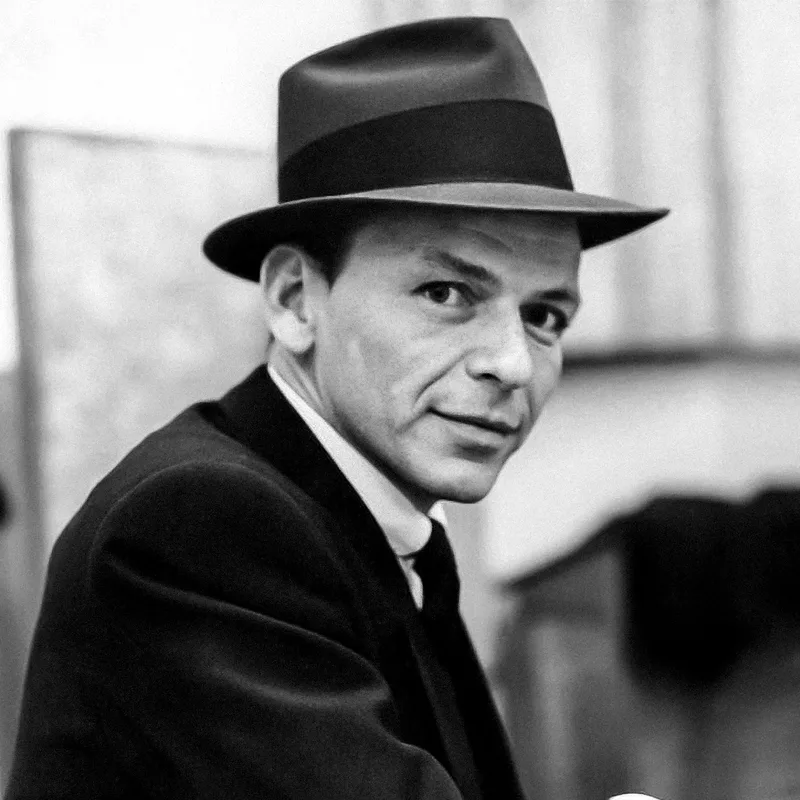
Frank Sinatra
Singer, Actor, 1915–1998
Pantheist, later Catholic
What is the meaning of life?
A wonderful time living, good friends, a fine family, and decency.
Sinatra's answers were plain. He told Walter Cronkite in 1965 that he would like to be remembered as a man who had a wonderful time living his life, with good friends and a fine family, and that he could not ask for more. Pressed in the same interview about gambling and the Mafia, he said that what he did with his life was of his own doing, and that he lived it the best way he could. In his 1963 Playboy interview he said what he was for: decency, love and consideration for his fellow man, and loving the stranger on the other side of the world, who has the same dreams, hopes and fears.
-
“I would like to be remembered as a man who had a wonderful time living his life, and who had good friends, a fine family. I don't think I could ask for anything more than that, actually.”1
-
“What I do with my life is of my own doing. I live it the best way I can.”1
-
“I'm for decency — period. I'm for anything and everything that bodes love and consideration for my fellow man. But when lip service to some mysterious deity permits bestiality on Wednesday and absolution on Sunday — cash me out.”2
-
“If you don't know the guy on the other side of the world, love him anyway because he's just like you. He has the same dreams, the same hopes and fears. It's one world, pal. We're all neighbors.”2
What is the meaning of the universe?
Nature, not a personal God; religion without the witch doctor.
Sinatra was raised in the Catholic Church in Hoboken, New Jersey. In his 1963 Playboy interview he set out a different view. Comparing himself to Schweitzer, Russell and Einstein, he said he believed in nature and in whatever there was real evidence for, and would call that God if that was what the word meant, but not a personal God who gives comfort or favours. Religion was for him a private matter between a man and God, without the witch doctor in the middle, and he resented the blood shed in Christ's name. In later life he moved back toward the Church: he joined the Sovereign Military Order of Malta in 1976, turned to Catholicism after his mother died in a plane crash in 1977, and died a practising Catholic.
-
“I believe in you and me. I'm like Albert Schweitzer and Bertrand Russell and Albert Einstein in that I have a respect for life – in any form. I believe in nature, in the birds, the sea, the sky, in everything I can see or that there is real evidence for. If these things are what you mean by God, then I believe in God. But I don't believe in a personal God to whom I look for comfort or for a natural on the next roll of the dice.”2
-
“I'm not unmindful of man's seeming need for faith; I'm for anything that gets you through the night, be it prayer, tranquilizers, or a bottle of Jack Daniel's. But to me religion is a deeply personal thing in which man and God go it alone together, without the witch doctor in the middle.”2
-
“There are things about organized religion which I resent. Christ is revered as the Prince of Peace, but more blood has been shed in His name than any other figure in history. You show me one step forward in the name of religion and I'll show you a hundred retrogressions.”2