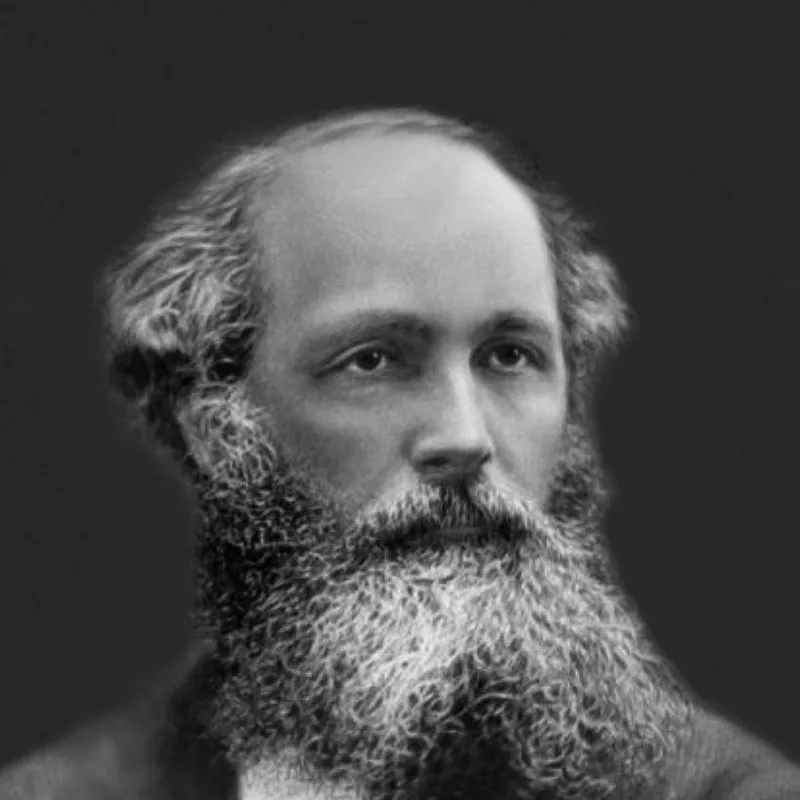
James Clerk Maxwell
Physicist, 1831–1879
Evangelical Christian
What is the meaning of life?
Do today's work as a part of the work of eternity.
Maxwell, a Scottish physicist, united electricity, magnetism and light in one set of equations and laid foundations for statistical physics; Einstein kept a picture of him on his study wall. At twenty-three, setting out on his own career, he wrote down a reflection for himself and later gave it to a friend as a parting gift. A person who would enjoy life, he wrote, should keep the work of the day before him, not yesterday's or tomorrow's; and happy is the one who sees in today's work a part of the work of life and of eternity.
-
“He that would enjoy life and act with freedom must have the work of the day continually before his eyes. Not yesterday's work, lest he fall into despair, nor to-morrow's, lest he become a visionary… Happy is the man who can recognise in the work of To-day a connected portion of the work of life, and an embodiment of the work of Eternity.”1
What is the meaning of the universe?
God made us to study his works and to seek him.
Maxwell was a devout Christian who read the Bible daily and served as an elder of his church, and he saw no conflict between his faith and his physics. He was wary, though, of tying theology to any particular scientific theory, since theories change. A prayer found among his papers asks God, who made man in his own image to seek after him, to teach us to study the works of his hands and to strengthen our reason for his service.
-
“Almighty God, who hast created man in Thine own image, and made him a living soul that he might seek after Thee and have dominion over Thy creatures, teach us to study the works of Thy hands that we may subdue the earth to our use, and strengthen our reason for Thy service…”2