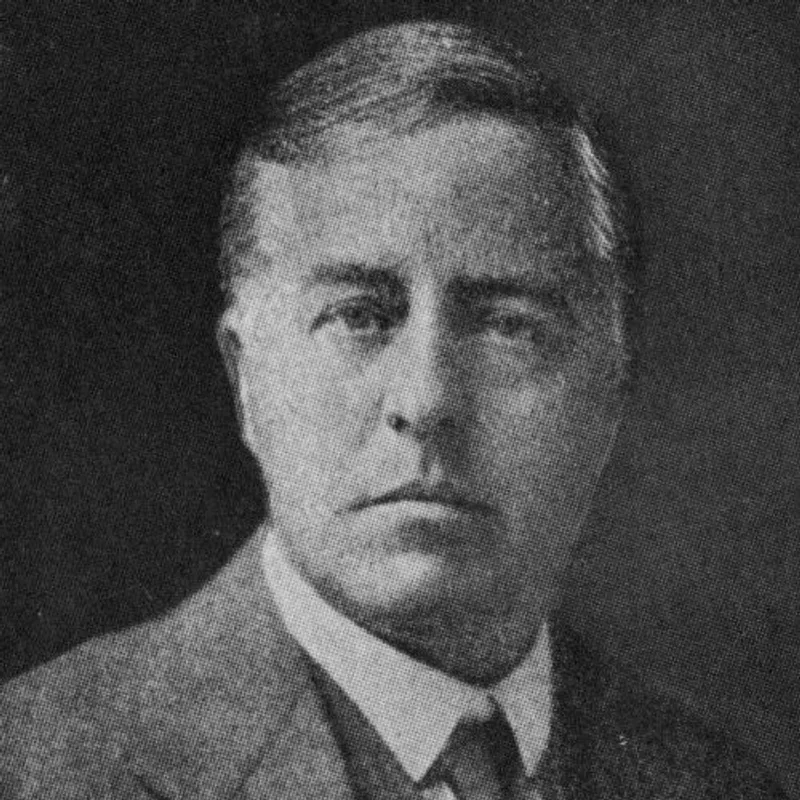
James Jeans
Physicist, Astronomer, 1877–1946
Agnostic idealist
What is the meaning of life?
Are we accidents in a universe hostile to life, doomed to freeze?
Jeans made his name in the physics of gases, radiation and the stars, and then became the most popular science writer in Britain; The Mysterious Universe (1930), which grew out of a lecture at Cambridge, sold seventy thousand copies there within two months. It opens with the bleakest picture astronomy could paint: the sun is dying, the universe is running down towards a final heat-death, and life seems to have stumbled by accident into a cosmos clearly not designed for it, clinging to a fragment of a grain of sand until it is frozen off. Is this, then, all that life amounts to? Astronomy, Jeans said, can only pose the question; for an answer we must turn to physics.
-
“Is this, then, all that life amounts to? To stumble, almost by mistake, into a universe which was clearly not designed for life, and which, to all appearances, is either totally indifferent or definitely hostile to it, to stay clinging on to a fragment of a grain of sand until we are frozen off, to strut our tiny hour on our tiny stage with the knowledge that our aspirations are all doomed to final frustration, and that our achievements must perish with our race, leaving the universe as though we had never been?”1
What is the meaning of the universe?
The universe looks more like a great thought than a great machine.
The answer Jeans found in relativity and quantum theory was that the old mechanical picture of the universe had collapsed. The world described by modern physics is made of mathematical relations, and the stream of knowledge, he wrote, was heading towards a non-mechanical reality: the universe begins to look more like a great thought than like a great machine, and its Great Architect appears as a pure mathematician. Mind might be not an accidental intruder into matter but its creator and governor. Jeans, an agnostic, offered all this as speculation, and many were unconvinced; Ludwig Wittgenstein said he loathed the book.
-
“Today there is a wide measure of agreement, which on the physical side of science approaches almost to unanimity, that the stream of knowledge is heading towards a non-mechanical reality; the universe begins to look more like a great thought than like a great machine.”2
-
“From the intrinsic evidence of his creation, the Great Architect of the Universe now begins to appear as a pure mathematician.”2