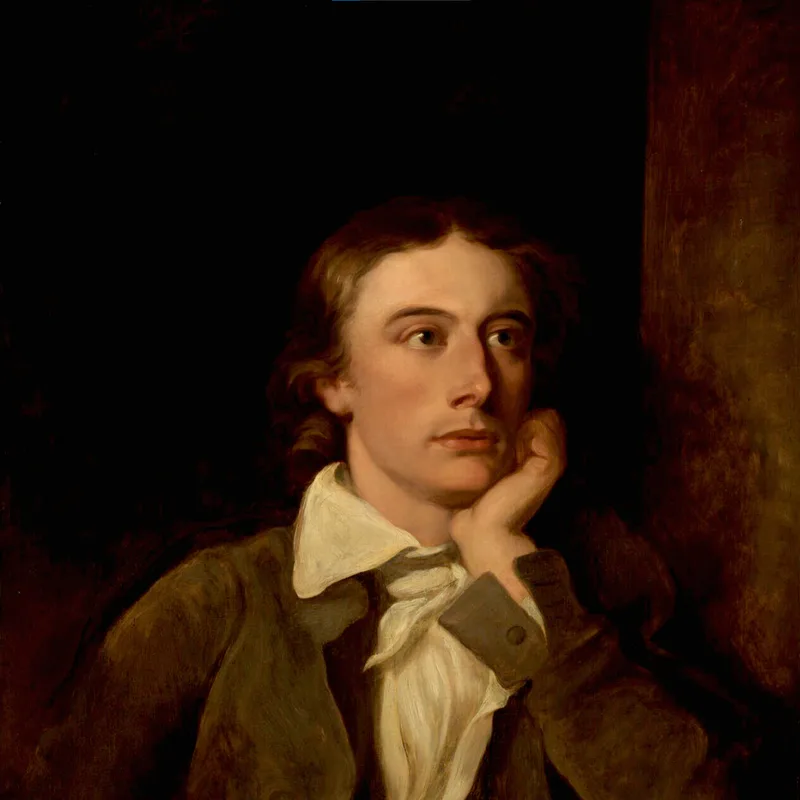
John Keats
Poet, 1795–1821
Romantic, beyond dogma
What is the meaning of life?
The world is a vale of soul-making, not a vale of tears.
Keats trained as a surgeon, gave up medicine for poetry, and died of tuberculosis in Rome at twenty-five, having written most of his great poems in about a year. In a long letter to his brother George and sister-in-law Georgiana in 1819, he rejected the idea of the world as a vale of tears from which God rescues us. The world is rather a vale of soul-making: a school in which pain and trouble turn a bare intelligence into a soul with an identity of its own. His other certainty was the holiness of the heart's affections.
-
“The common cognomen of this world among the misguided and superstitious is “a vale of tears,” from which we are to be redeemed by a certain arbitrary interposition of God and taken to Heaven—What a little circumscribed straightened notion! Call the world if you please “The vale of Soul-making.” Then you will find out the use of the world…”1
-
“Do you not see how necessary a World of Pains and troubles is to school an Intelligence and make it a soul? A Place where the heart must feel and suffer in a thousand diverse ways.”1
What is the meaning of the universe?
What the imagination seizes as beauty must be truth.
Keats had no settled religion and was openly scornful of the Christian picture of the world as a vale of tears. What he trusted were the affections of the heart and the imagination, which he believed could seize truth that reasoning reaches slowly, if at all. In a letter of 1817 he wrote that what the imagination seizes as beauty must be truth, and he returned to the idea in the closing lines of “Ode on a Grecian Urn”. Whether the soul survives death he left open: in his 1819 letter he took its immortality for granted only for the sake of the argument.
-
“I am certain of nothing but of the holiness of the Heart’s affections, and the truth of Imagination. What the Imagination seizes as Beauty must be truth—whether it existed before or not…”2
-
“When old age shall this generation waste, / Thou shalt remain, in midst of other woe / Than ours, a friend to man, to whom thou say’st, / “Beauty is truth, truth beauty,”—that is all / Ye know on earth, and all ye need to know.”3