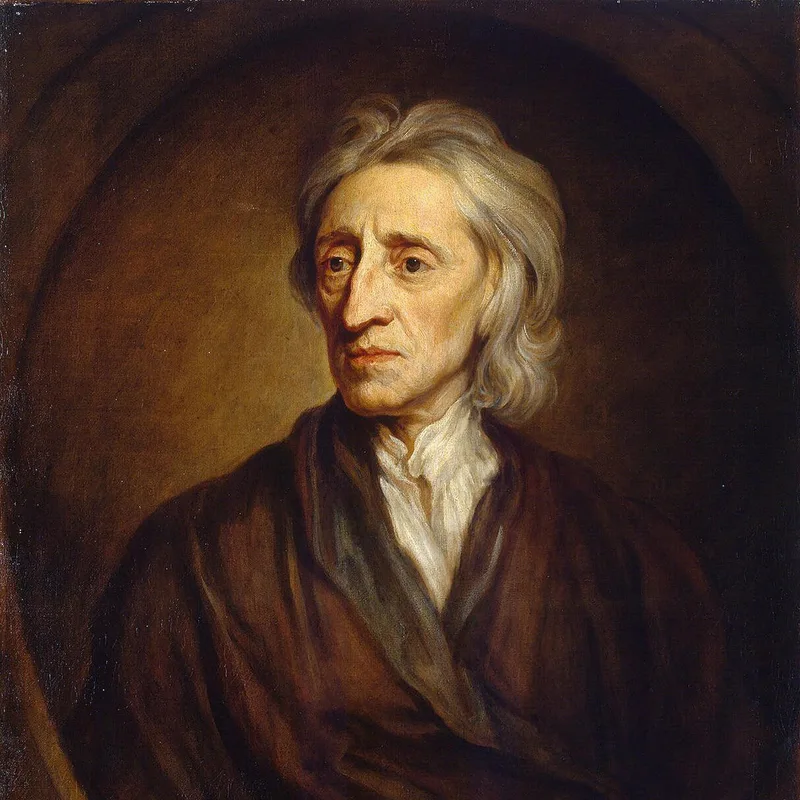
John Locke
Philosopher, Physician, 1632–1704
Christian empiricist
What is the meaning of life?
The highest perfection is the pursuit of true and solid happiness.
Locke, trained as a physician, became a founding figure of English empiricism and of liberal political thought; the idea that governments exist to protect people's lives, liberties and estates comes from his Two Treatises of Government (1689). In An Essay Concerning Human Understanding he argued that the mind begins as a blank page and that all our ideas come from experience. Human beings, he wrote, all seek happiness but find it in very different things, so the ancient quarrel over the highest good was as pointless as arguing whether apples or plums taste best. What matters is to pursue real happiness rather than imaginary, and for Locke, a Christian, that meant weighing this life against the eternal one to come.
-
“As therefore the highest perfection of intellectual nature lies in a careful and constant pursuit of true and solid happiness; so the care of ourselves, that we mistake not imaginary for real happiness, is the necessary foundation of our liberty.”1
-
“Hence it was, I think, that the philosophers of old did in vain inquire, whether summum bonum consisted in riches, or bodily delights, or virtue, or contemplation: and they might have as reasonably disputed, whether the best relish were to be found in apples, plums, or nuts, and have divided themselves into sects upon it.”1
What is the meaning of the universe?
We know God exists more surely than anything outside us.
Locke denied that God is an idea stamped on the mind at birth, since no idea is innate; yet he held that God's existence is the most certain thing reason can discover. Starting from the plain fact of our own existence and the impossibility of something coming from nothing, he argued, reason arrives at an eternal, all-powerful and all-knowing being. In The Reasonableness of Christianity (1695) he argued that the faith is consistent with reason. He also defended religious toleration, though he excluded atheists and Catholics from it.
-
“Though God has given us no innate ideas of himself; though he has stamped no original characters on our minds, wherein we may read his being; yet having furnished us with those faculties our minds are endowed with, he hath not left himself without witness: since we have sense, perception, and reason, and cannot want a clear proof of him, as long as we carry ourselves about us.”2
-
“…we more certainly know that there is a God, than that there is anything else without us.”2