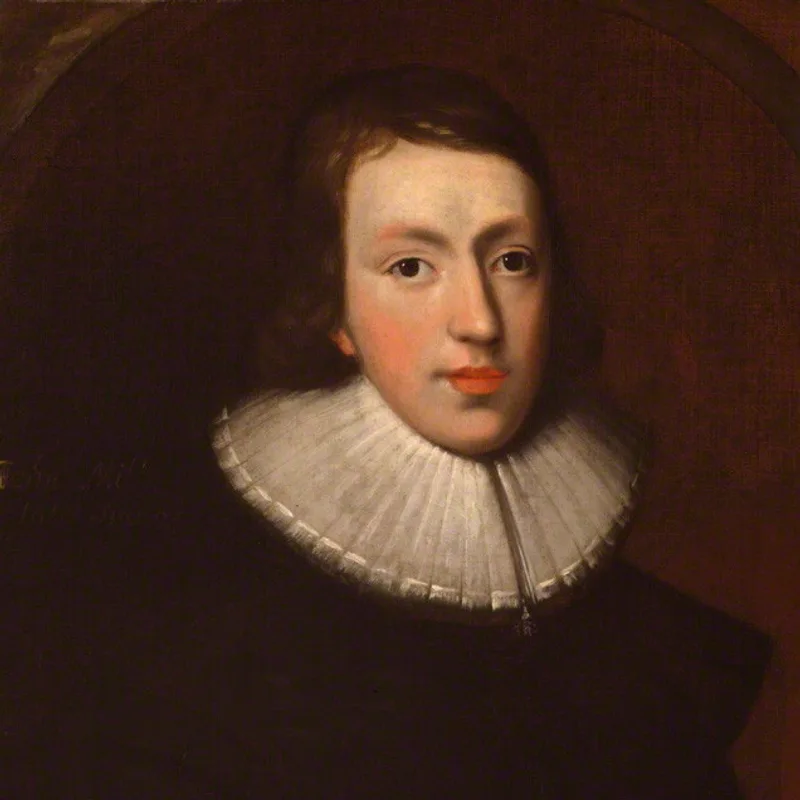
John Milton
Poet, Polemicist, 1608–1674
Puritan Christian
What is the meaning of life?
Serve God with patience; they also serve who only wait.
Milton was the most learned English poet of his age and a fierce pamphleteer for the Puritan side in the English Civil War, defending freedom of the press, the right to divorce and the execution of King Charles I. By 1652 he was completely blind, and he later dictated Paradise Lost to helpers. In a sonnet written around the time he lost his sight, he worries that his talent, given to him to serve God, is now useless. Patience answers that God needs neither man's work nor his gifts, and that those who bear his yoke serve him, even if they only stand and wait.
-
“…God doth not need / Either man's work or his own gifts, who best / Bear his milde yoak, they serve him best, his State / Is Kingly. Thousands at his bidding speed / And post o're Land and Ocean without rest: / They also serve who only stand and waite.”1
What is the meaning of the universe?
God's providence is real, and his ways can be justified.
Paradise Lost (1667) retells the fall of Satan and of Adam and Eve in twelve books of blank verse. At its opening Milton asks the Holy Spirit to help him assert eternal providence and justify the ways of God to men: to show that God is just although evil exists. His answer is free will. God made angels and humans free, so that their obedience and love would be real; evil entered through their free choices, and God turns even that evil to good. Milton's own beliefs were unorthodox in places, as his theological treatise De Doctrina Christiana, discovered in 1823, later showed.
-
“…what in me is dark / Illumine, what is low raise and support; / That, to the height of this great argument, / I may assert Eternal Providence, / And justify the ways of God to men.”2