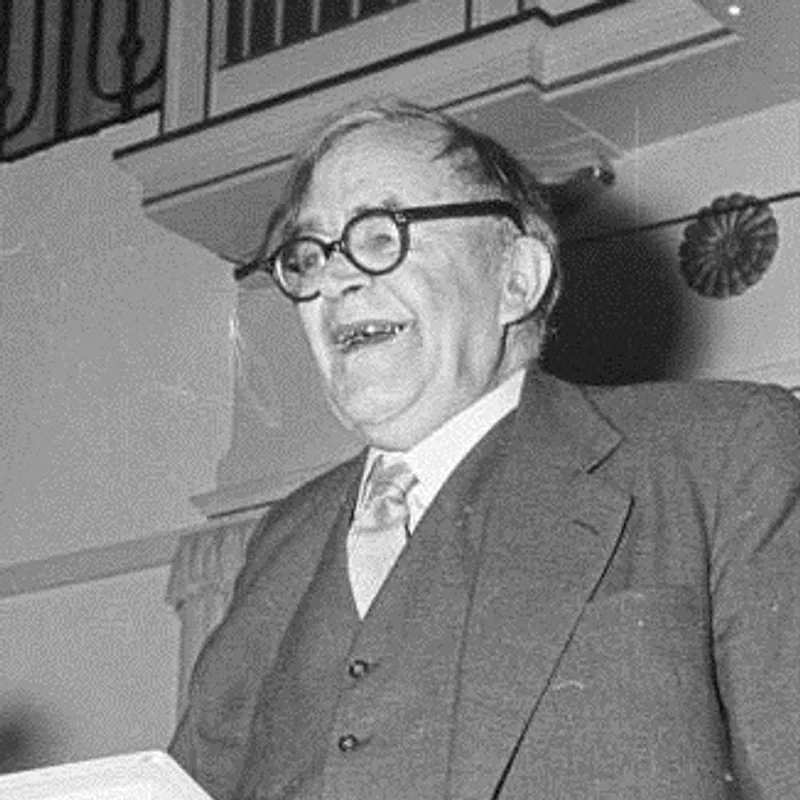
Karl Barth
Theologian, 1886–1968
Theology of the Word
What is the meaning of life?
Grace that does not show in how you live is not grace.
Barth was a Swiss Reformed pastor whose commentary on Romans (1919) broke with the liberal theology of his teachers and, as one critic said, fell like a bomb on the playground of the theologians. He was the main author of the Barmen Declaration of 1934, in which the Confessing Church rejected Nazi control of the churches, and he lost his chair at Bonn for refusing to swear unconditional loyalty to Hitler. For him faith was never a private feeling: grace must show itself in life, or it is not grace.
-
“Grace must find expression in life, otherwise it is not grace.”1
What is the meaning of the universe?
God is wholly other, known only by his own self-revelation.
Barth's God is the 'wholly other', infinitely different from the world, who cannot be reached by human religion, philosophy or feeling but only known where he reveals himself, in Jesus Christ. Measured against that revelation, he argued, religion as a human project is unbelief, an attempt to grasp God on our own terms. He worked on his Church Dogmatics, more than nine thousand pages long, until his death, and said he hoped the angels played Mozart in heaven.
-
“We begin by stating that religion is unbelief.”2