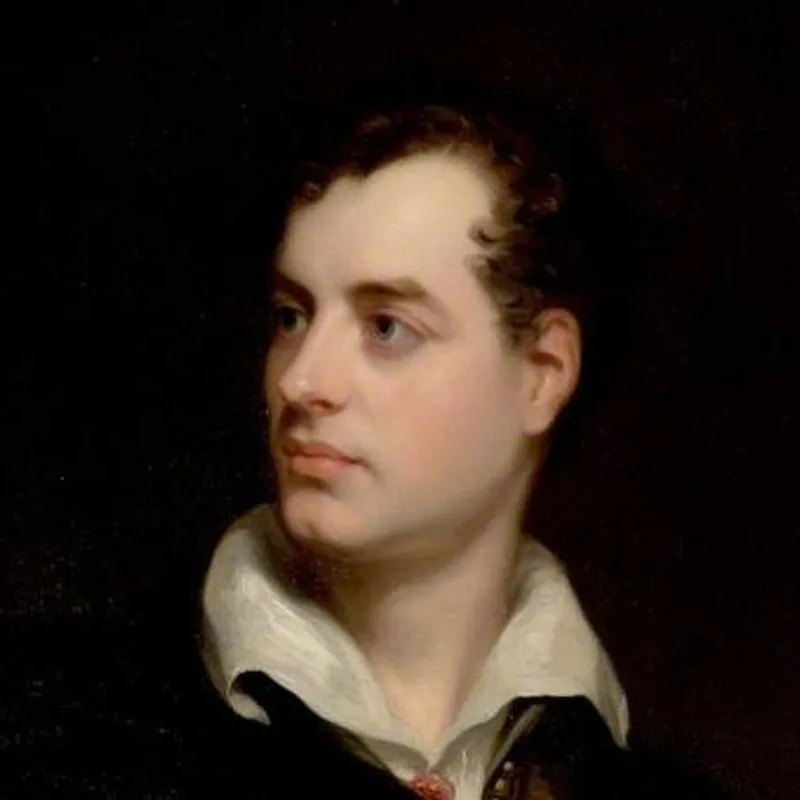
Lord Byron
Poet, 1788–1824
Religious skeptic
What is the meaning of life?
To create is to live more intensely; live well, die without pain.
Byron inherited a peerage and a crumbling abbey at ten, woke up famous with the first cantos of Childe Harold's Pilgrimage in 1812, left England for good in 1816 amid scandal and debt, and died at thirty-six in Greece, where he had gone to help fight for Greek independence. His poems and letters show a restless man who valued life most at its most intense: to create, he wrote in Childe Harold, is to live a being more intense. To his friend Hodgson, in 1811, he summed up what he asked of life more modestly: to live well if possible, and to die without pain.
What is the meaning of the universe?
Nothing to do with your immortality; better any heresy than sects.
In 1811, just back from two years in the Mediterranean, with his mother and two close friends newly dead, Byron answered his friend Francis Hodgson, who had objected to the religious doubts in Childe Harold, with open scepticism: he wanted nothing to do with immortality, found revealed religion unjust to the millions who had never heard of it, and preferred any heresy to the Christian sects tearing each other apart. He did not deny God; but a God who wished to be known, he wrote, would have made Himself plain to all nations. Ten years later, in his Detached Thoughts, he had come round to thinking the mind's immortality as probable as the body's mortality.
-
“I will have nothing to do with your immortality; we are miserable enough in this life, without the absurdity of speculating upon another.”2
-
“I am no Platonist, I am nothing at all; but I would sooner be a Paulician, Manichean, Spinozist, Gentile, Pyrrhonian, Zoroastrian, than one of the seventy-two villainous sects who are tearing each other to pieces for the love of the Lord and hatred of each other.”2
-
“…that the mind is eternal seems as probable as that the body is not so.”3