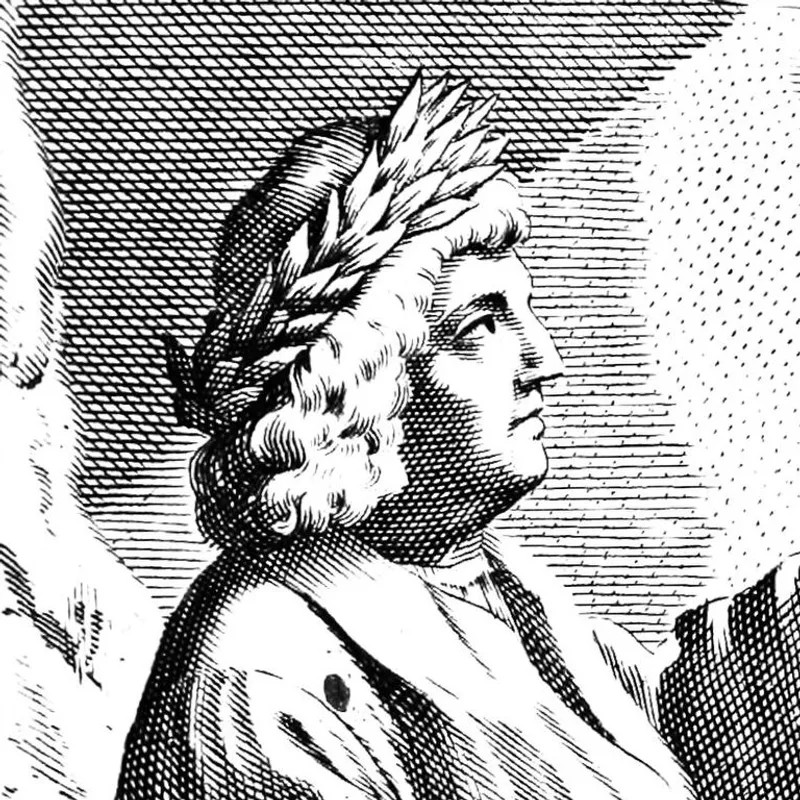
Lucretius
Poet, Philosopher, c. 99 – c. 55 BC
Epicurean
What is the meaning of life?
Peace of mind: no pain, no fear of the gods or death.
Lucretius is known only through one long poem, On the Nature of Things, which sets out the philosophy of Epicurus in Latin verse. Its aim is practical: to free the reader from the two fears that ruin human life, fear of the gods and fear of death. Nature asks for little, that the body be free of pain and the mind of care and fear, and people who chase power and wealth miss it. Since the mind dies with the body, death is nothing to us, and someone who has enjoyed life can leave it like a guest who has eaten well.
-
“O wretched minds of men! O blinded hearts! / In how great perils, in what darks of life / Are spent the human years, however brief!— / O not to see that nature for herself / Barks after nothing, save that pain keep off, / Disjoined from the body, and that mind enjoy / Delightsome feeling, far from care and fear!”1
-
“Therefore death to us / Is nothing, nor concerns us in the least, / Since nature of mind is mortal evermore.”2
-
“…why not, / Even like a banqueter, depart the halls, / Laden with life? why not with mind content / Take now, thou fool, thy unafflicted rest?”2
What is the meaning of the universe?
Atoms and void, nothing from nothing; nature runs itself without gods.
Following Epicurus, Lucretius held that everything is made of atoms moving in an infinite void, that nothing comes from nothing, and that our world is one of countless others that form and dissolve. Fear of the gods, he argued, comes from not knowing the causes of things; once nature's laws are understood, the terror goes. The gods exist, but they live in perfect calm, far from the world and untouched by human affairs, and nature does everything by itself. The poem was nearly lost, and its rediscovery in 1417 fed the science and freethinking of the Renaissance.
-
“This terror, then, this darkness of the mind, / Not sunrise with its flaring spokes of light, / Nor glittering arrows of morning can disperse, / But only Nature's aspect and her law, / Which, teaching us, hath this exordium: / Nothing from nothing ever yet was born.”3
-
“Which well perceived if thou hold in mind, / Then Nature, delivered from every haughty lord, / And forthwith free, is seen to do all things / Herself and through herself of own accord, / Rid of all gods.”1