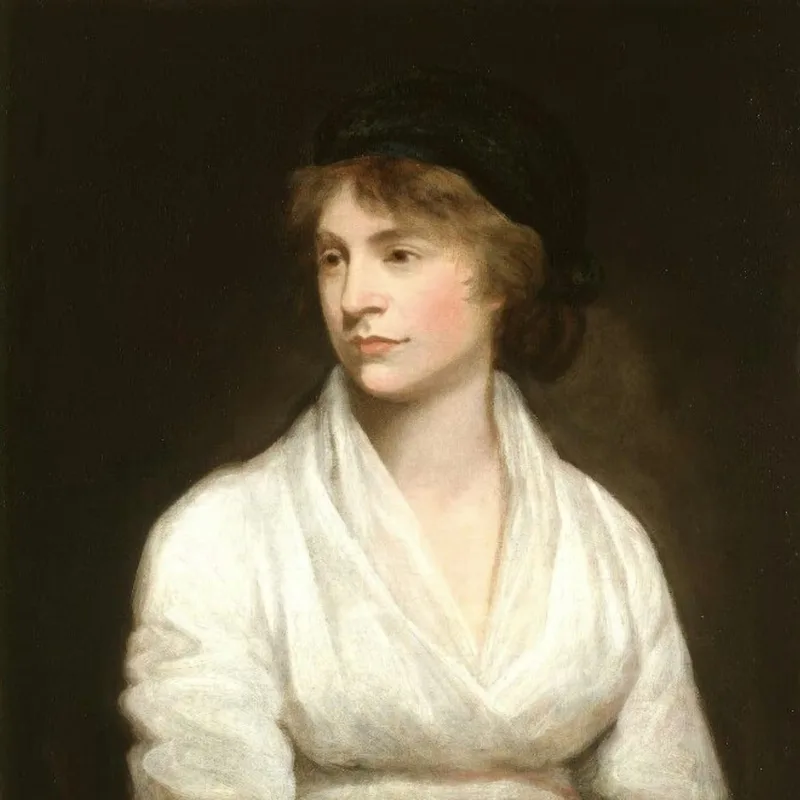
Mary Wollstonecraft
Writer, Philosopher, 1759–1797
Rational Dissenter, feminist
What is the meaning of life?
Independence is the grand blessing of life and the basis of virtue.
Wollstonecraft grew up in a struggling family, worked as a companion, teacher and governess, and became a writer in London's radical circles. In A Vindication of the Rights of Woman (1792) she argued that women are rational beings who should be educated as such, not trained to please, and that virtue and reason are the same for both sexes. Independence, earned by reducing one's wants rather than by depending on others, was for her the grand blessing of life. She married the philosopher William Godwin in 1797 and died days after giving birth to their daughter, the future Mary Shelley.
-
“Independence I have long considered as the grand blessing of life, the basis of every virtue; and independence I will ever secure by contracting my wants, though I were to live on a barren heath.”1
-
“It may be confidently asserted that no man chooses evil because it is evil; he only mistakes it for happiness, the good he seeks.”2
What is the meaning of the universe?
One God, one eternal standard of virtue for women and men.
Wollstonecraft's arguments rest on a rational faith she learned among the Dissenters of Newington Green: a wise and good God who made human beings capable of reason and of growing in virtue. Because virtue comes from that one source, it has a single eternal standard, and it cannot be one thing for men and another for women. Her religion grew less conventional over the years, but she never abandoned the belief in a benevolent Creator.
-
“In fact, how can they, if virtue has only one eternal standard? I must therefore, if I reason consequentially, as strenuously maintain that they must have the same simple direction as that there is a God.”3