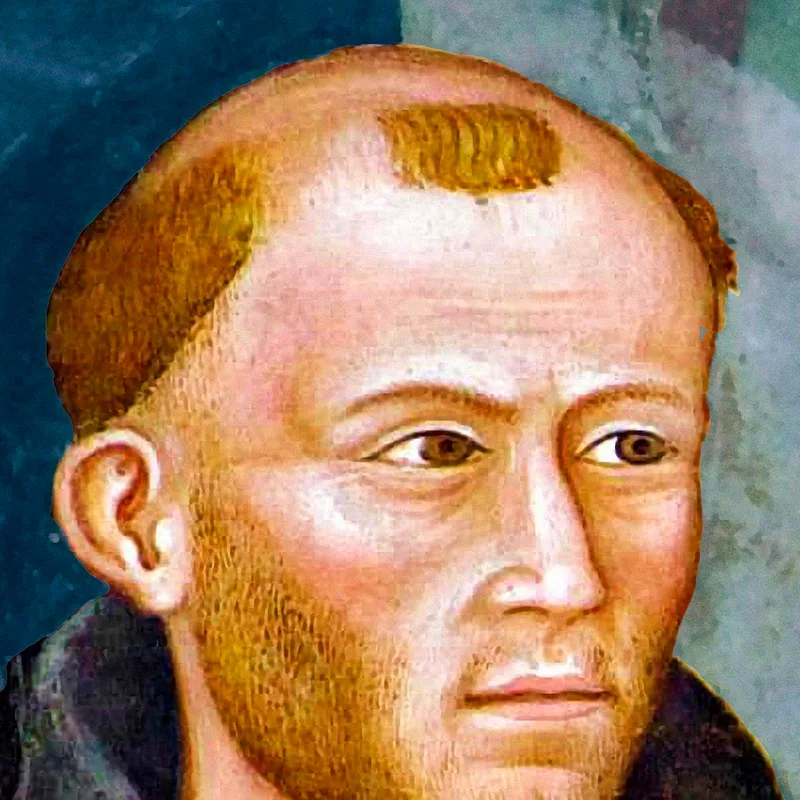
Meister Eckhart
Theologian, Mystic, c. 1260 – c. 1328
Christian mystic
What is the meaning of life?
Quit yourself: abide in God, and you are free from all grief.
Eckhart was a German Dominican friar who taught theology in Paris and preached in the vernacular to nuns and lay people along the Rhine, in sermons whose daring language has fascinated readers ever since. Their great theme is detachment: the soul must go out of itself and empty itself of all things, of desires, of images, even of its own will, so that God may be born in it. This passage from nothingness to real being is a birth accompanied by pain, he preached, but whoever abides and walks in God alone is free from all grief and trouble. At the end of his life he was tried for heresy, and some of his propositions were condemned by Pope John XXII in 1329, shortly after his death.
-
“This passage from nothingness to real being, this quitting of oneself is a birth accompanied by pain, for by it natural love is excluded. All grief except grief for sin comes from love of the world. In God is neither sorrow, nor grief, nor trouble. Wouldst thou be free from all grief and trouble, abide and walk in God, and to God alone.”1
What is the meaning of the universe?
My eye and God's eye are one eye, one sight, one love.
Eckhart spoke of a ground of the soul where God and the soul are one, and of a Godhead beyond God, beyond every name and image, which can only be described by what it is not; to his accusers this sounded like erasing the line between creature and Creator. For Eckhart it was the heart of the Gospel. God's essence is goodness, and goodness must give itself, so God cannot hold back His grace from the humble. In his most famous sentence, the eye with which he sees God is the same eye with which God sees him.