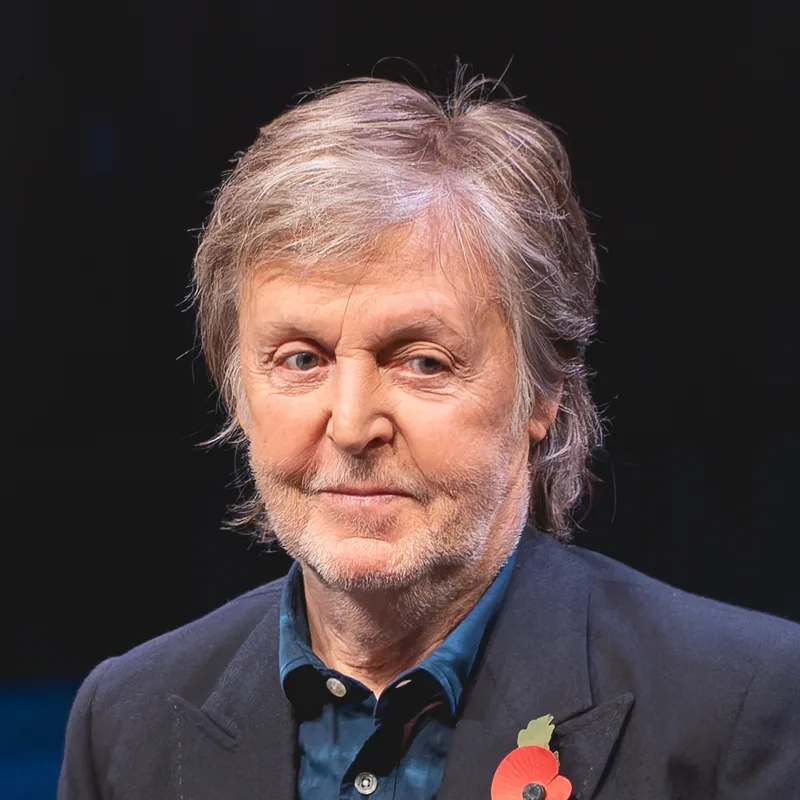
Paul McCartney
Singer-songwriter, Bassist, born 1942
Not exactly religious
What is the meaning of life?
Get on with it, be optimistic, and enjoy the moment.
McCartney has never offered a system; his answers are about how to carry on. The ethic he names is the one his Liverpool family gave him — get on with it, be optimistic, overcome it, have a laugh — which he called quite deep when he spoke about it in 2000, two years after the death of his wife Linda. He tries to treat whatever he is doing as a moment that might be enjoyed. In 1967, explaining "All You Need Is Love", he said the Beatles had one message for the world, and it was love. Since the Beatles studied Transcendental Meditation with the Maharishi in India in 1968, he has said it gives him moments of serenity in moments of madness.
-
“I was up in Liverpool over the New Year with my family. And the way they are, they induce a certain kind of character in you. Which is, 'Get on with it. Be optimistic. Overcome it. Have a laff.' To some people that can look a bit fatuous, but to me it's quite deep. Yes, all these things have happened to me, but I don't want them to break me.”1
-
“I am this famous character, I know that, there's no way of escaping it. So I try to find a way of enjoying it. Whatever I'm doing, whoever it's with, I just think, 'This is a moment. I wonder if we can enjoy it?' And generally I seem to find a way.”1
-
“So we had one message for the world — 'LOVE.' We need more love in the world. It's a period in history that needs love. We hoped in some small way to get people thinking about love, and not hate.”2
-
“In moments of madness, it has helped me find moments of serenity.”3
What is the meaning of the universe?
No church God, but a belief in goodness, a good spirit.
McCartney was baptised in his mother's Catholic faith, but religion was not emphasised at home, and his father was an agnostic former Protestant. In 1967 he said he envied George Harrison, who had found a great faith; in January 1970 he told Hit Parader that none of the Beatles believed in God. Later he settled on something less definite: a belief in goodness, a good spirit, with God and the Devil as the names people gave to good and evil. Linda's illness, he said in 1997, made him talk to "God, or It" more often, and in 2000 he described a feeling that was not exactly religious but included God. On life after death he says he does not know: as young men the Beatles promised that whoever died first would get a message through, and none has come.
-
“We probably seem to be anti-religious … none of us believes in God.”4
-
“With life and all I've been through, I do have a belief in goodness, a good spirit. I think what people have done with religion is personified good and evil, so good's become God with 'o' out, and evil's become Devil with a 'd' added. That's my theory of religion.”5
-
“I have a certain kind of feeling that's not exactly religious, but it includes God, includes spirituality – and that hasn't changed at all.”1
-
“I don't know. When we were kids, we always used to say, 'Whoever dies first, get a message through'. … Then when John died, I thought, maybe we'll get a message now, because I know he knew the deal, and I haven't had a message from John. Now, I don't know if you can get messages back. Maybe you're living, but there's no postal service!”6