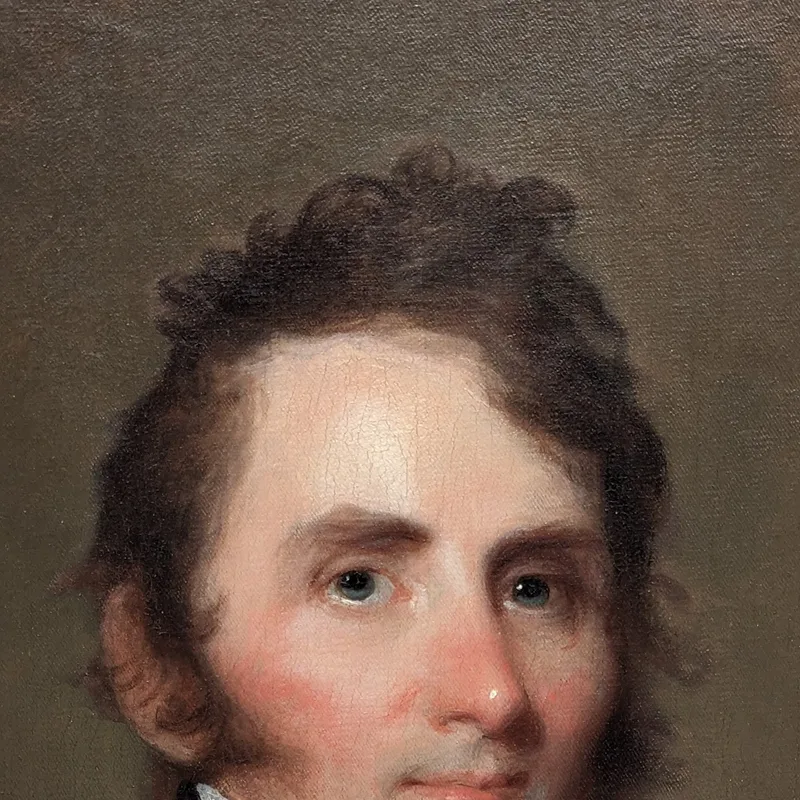
William Ellery Channing
Minister, Theologian, 1780–1842
Unitarian Christian
What is the meaning of life?
Grow in goodness: every soul is bound up with all others.
Channing was minister of the Federal Street Church in Boston for nearly forty years and the leading voice of American Unitarianism. He believed that every human being has a capacity to grow in reason, conscience and love, and that the purpose of life is to develop it, a task he called self-culture. He saw that growth as social: each person is a living member of the family of all souls, so whatever good or evil we do spreads outward. These convictions made him an early critic of slavery, in his book Slavery (1835), and a strong influence on Emerson and the Transcendentalists.
-
“I am a living member of the great Family of All Souls; and I cannot improve or suffer myself without diffusing good or evil around me through an ever-enlarging sphere.”1
What is the meaning of the universe?
God's marks are in nature, but more in a noble mind.
In his Baltimore sermon of 1819, Unitarian Christianity, Channing rejected the Trinity and the Calvinist teaching that most of humanity is predestined to damnation, which he thought made God less moral than a good man. His God is a loving Father whose character can be known through reason as well as scripture. In Likeness to God (1828) he argued that religion consists in growing likeness to God, because the human mind shares in the divine nature: God's marks are in the heavens and the earth, but even more in a free intellect, in magnanimity and in forgiving love.
-
“I see the marks of God in the heavens and the earth, but how much more in a liberal intellect, in magnanimity, in unconquerable rectitude, in a philanthropy which forgives every wrong, and which never despairs of the cause of Christ and human virtue.”2